Sunday, March 31, 2013

DD=OO: Direct Democracy is the Only Option

The Problem:
Karina asked this question on Yahoo.com: Is direct democracy good for state government?


The Solution:

Direct Democracy is the only way forward because:

  1. It ensures that decisions are made by the biggest possible group which reduces the possibility of elite capture of government.
  2. It encourages everybody to take part in debate which not only ensures people are more aware about important issues, diversity will ensure that solutions are better and more creative as proven by crowdsourcing.
  3. It allows everybody to propose issues that are important to them so the debate is about things that matter to large parts of the population, not only to specific interests.
But if it would be easy to do, some would have tried already. Luckily, information technology has allowed new ways to organizing. Efficiency remains the biggest challenge but it can be solved as follows:
  1. Everybody can propose issues for discussion on a government facebook page
  2. If 2% of the eligible voters click like on a proposal, it is put up for discussion.
  3. Everybody can have their say or make changes to the proposal, but to encourage compromise and limit the range of ideas, amendments must be voted up. The submitter of the original idea can revise a proposal taking into account various amendments to improve the quality of the proposal using the wisdom of the crowd and to increase the support for the proposal from a wider group.
  4. Once the proposal is final, everybody can say whether they are for or against. Again statements can be voted up. 
  5. From experience everybody knows that crowdsourcing relies on a very small group of people to contribute (the so called 1%), there are about 9% that are willing to vote up a proposal. The remaining 90% is silent but should not be voiceless! Therefore, voting cannot be done on a voluntary basis as we will reduce the voting public to the 10% active citizens. So here comes the crucial part of the solution: rather than asking everybody to vote on everything, we need to demand that a random sample of all eligible citizens votes on each proposal. If you demand 600 randomly selected citizens to vote, the result will be much more representative than when you ask all citizens to vote and only 70% actually vote (which is a very high figure for turn out). It is certainly more representative than asking 600 parliamentarians...


The Transition:
This is how direct democracy can work. But let's keep discussing, I am sure that the crowd has even better ideas.

Stealing from the Swiss!

The Problem:

The Swiss are often in the news because they have a system of direct democracy. While this is not really the case as Switzerland has a parliament (national council), it is true it uses referendums once in a while. 
In 2012 for example, the Swiss population was asked 12 questions in 4 referendums of which 4 questions were adopted. Just as a comparison, US congress introduced 3914 bills in 2012 of which 61 were adopted, and that was their worst performance since WOII. 

From experience the Swiss know that asking the People more often than 4 times a year is counterproductive because fewer people will show up. Participation in any election has already dropped below 50% in Switzerland, so any vote can be approved by 25% or less of the electorate. That is probably better than asking 200 parliamentarians but it falls short of direct democracy. Or at least, we can do better.


The Solution:

But there are little gems in the Swiss system: any proposal that gets 100,000 signatures (that is less than 2% of the registered voters) will have to be considered in a referendum. That is a beautiful idea that this blog fully supports.
But the most beautiful part of the Swiss system is not used to its fullest. Each time the Swiss have a referendum, a random sample of the population is selected to count the votes. That is of course a waste of time and resources. But the random sampling is perfect and the referendum should be replaced by asking this randomly selected group to vote for the Swiss population. The result would be closer to the will of the Swiss People then the referendum result. And a lot cheaper too. That is what I would call direct democracy.


The Transition

The key elements of Agile Direct Democracy already exist and have been tested. It is just a matter of putting them together into a functioning system.

Sunday, August 19, 2012

Liquid Feedback with Random Sampling


The Problem:

Liquid Feedback uses a system of direct democracy that allows voters to transfer their votes to other voters whom they trust. While I support the arguments in favour of vote delegation made in this blog (and comment), I would like to raise two argument why I have come to the conclusion why voting is the wrong approach in the first place.

This blog correctly identifies the problem with direct democracy: it violates the return on investment instinct of the rational voter. This means, some people do not have time or do not feel competent to engage in every discussion. Delegating the vote seems to be the most logical solution but has two important disadvantages:

One: Animal Farm Revisited:
The crisis in our current democratic system emerged from a well intended system of representation (i.e. parliament) that has lost its legitimacy because the representatives have been captured by narrow interests (i.e. most often the 1% top wealthy). This tiny group is controlling the 99% not illegally but through systems of influence they can afford: lobbying, election contributions, etc.
If we build a system that relies on direct democracy, the number one rule of crowdsourcing will kick into action: the 1:9:90 rule. Applied to political issues, this would mean, 1% of the people is willing to propose legislation and discuss it, 9% of the people is willing to vote and 90% of the people will remain inactive.
Can you imagine how easy it would be for the current powerful elite to take over such a system. It is not very different from the current system of representation. They only have to provide resources to the opinion they support and their view will win every vote.
Direct democracy will have to defy the 1:9:90 rule. This can only be done by moving away from general voting and opting for random sampling.

Two: Dumb down the Masses:
The second reason why vote delegation cannot be allowed in a direct democracy is to activate the public. The current system and elite have managed to dumb down the voter. They have done so consciously. Reversing the trend needs an active intervention because “dumbing” is a self-reinforcing process. Research shows that “rather than motivating an increased search for information, a lack of knowledge about a specific socio-political issue will (a) foster feelings of dependence on the government, which will (b) increase system justification and government trust, which will (c) increase desires to avoid learning about the relevant issue when information is negative or when information valence is unknown.” So once people are ignorant, they want to become even more ignorant. If you do not have time to read the academic paper, you can watch the short version 30 seconds.  Or the dumb down long version.
To reverse the trend, we will have to force those who have a strong interest in an issue to try to explain their position on the issue to people. That is very different from “please let me vote for you because I am attractive and you will probably not understand what this is about”.
Even the most complex issue can be explained in a way that the average grownup can understand. Climate change explained by Al Gore is a good example. It takes a bit of effort, but the alternative is just not acceptable.


The Solution:

But how do we deal with the problem that not every citizen can become a full time politician? We allow the 1% to express their opinion on a subject to ALL citizens. Then we select a random sample of citizens (or party members or whatever the voting group is). For this small group voting is mandatory and they can review all the arguments made by the 1%. The result of this vote is the same as if the whole population would have voted. (That is the beauty of statistics.) If this system would be applied at European level, a voter would probably have to vote on 1 out of every 1 million decisions. In Belgium the number would be slightly higher: every citizen would have to vote on 1 out of every 40’000 decisions. That sounds undemocratic, but it isn’t. 

The Transition:

Liquid Feedback is the ideal place to test the random sampling system. Initially, there will only be few members and thus the statistics force many people to vote. But as numbers of members grow, the percentage of those who have to vote will go down and we can focus on being part of the 1% on those issues that are very close to our heart. 

Friday, May 18, 2012

Harvard Business Review Confirms Power of Agile Reform

"Who needs an agenda if you have a vision" was the first post on this blog and explained that Agile Reform is an unfocused method to reform complex systems. Agile Reform is driven by a common goal and a plethora of trials and errors. It has 5 principles:
  1. Have a Vision
  2. Several solutions for the same problem
  3. Just start doing
  4. Change is managed at the lowest possible level (subsidiarity)
  5. Big change is the result of the iteration of small changes.

The Harvard Business Review (HBR) now confirms that about 70% of entrepreneurs who had a successful exit (that is, an IPO or sale to another firm), did NOT start with a business plan. "[The businesses] were conceived not with a document but with a feeling and doing for an authentic vision. Clarity of purpose and passion ruled the day with less time spent writing about an idea and more time spent just doing it."
"The best content for a business plan is real-world data based on testing aspects of the concept. ... You want simple, iterative tests."

Principle 2 is not really part of the HBR suggestions, but supposedly start-ups are not really complex enough to have competing solutions for the same problem.

Sunday, May 13, 2012

Crowdcracy Does Not Need Elections

This Presentation shows graphically why we are better off when we have abolished elections.


Sunday, April 29, 2012

What this Blog is About


The Problem:
It is time to review what this blog is about. Rather than having a detailed aspect of the idea in every blog, one wants to see the proposed changes in one place.


confusion quotes confused dog koala


The Solution and the Transition:
Since we all think and remember in different ways, the next few blogs will provide the key ideas behind this blog in different formats. This post will use a table to compare the current situation with the democracy proposed by this blog.


OLD
Transition
NEW
All citizens elect representatives to Parliament

Elections and Parliament are no longer needed
All citizens or parliament elect the executive.

Elections and the executive are no longer needed
Parliament or executive propose new laws
Each member of parliament can start a blog where followers can propose and debate laws publicly.  
Any citizen can propose a new law on the “National Facebook”. This law will be tabled for discussion if it gets at least 2% of all citizens have “liked” the proposal.
Parliament debates new laws
Any citizen can post an opinion about the proposed law on the “National Facebook”. Amendments can be proposed and “liked”. Opinions or coalitions of opinions can be posted and “liked”. The cost of implementation (taxes) is part of the discussion.
Parliament votes to approve new laws
Each Member of Parliament can vote in line with the majority of her followers.
A random sample of citizens votes for the law after reviewing the 10 most popular opinions on the “National Facebook”.
Parliament debates and approves the budget
Transparency of the national budget can be improved by stating the cost by public service.
A National Budget is no longer needed. The cost of a new law are discussed and agreed when the law is discussed.
The Public Administration implements laws and programs
Privatisation is complicated and only mixed results have been achieved but we have to keep trying until we get it right.
Private companies bid to implement the law and are allowed to raise the “taxes” to pay for the implementation. Other companies bid to review performance, handle complaints and audit the books.
Parliament controls the implementation of laws and budgets.
Each member of parliament can start a complaint and investigation website where citizens can submit their issues and concerns.
Any citizens can launch a complaint about the executive on the “National Facebook”. An independent company normally handles complaints. If 1% of all citizens “liked” the complaint, the executive concerned needs to provide an official answer. If 1% of all citizens to not like the answer, a prosecutor or auditor investigates the case and brings charges if sufficient proof exists.
Success is measured on the basis of economic growth.
Every citizen can start a discussion on the definition of happiness.
Success is measured on the basis of gross national happiness.


In line with the principles of agile change, the transition does not have to be focused. The goal is to make the political system increase the happiness of the 99%. A common goal and a plethora of trials and errors. Applause if several solutions are developed for the same problem. It can start now. Just do it!

Sunday, January 29, 2012

On my way to happine-he-hess, yuha, yuhe-he-he

The problem:
Politics is shifting from economic growth to gross happiness. But what policies do our politicians need to pursue to help us become happier creatures?
Contrary to economic growth we are still struggling to measure happiness objectively. Researchers, countries and companies have invested their efforts in defining measurable proxies for happiness. This means: what questions can I ask someone to get a true measure of that persons happiness. The questions range from "Do you have unbearably noisy neighbours" to "Have you recently helped a stranger"Despite countless research projects, no agreement has been reached on what the perfect question is. There are three basic approaches: subjective well-being, capabilities and fair allocations


Capabilities and Allocations are linked to aspirations and entitlements. These are indicators related to wealth rather than happiness. Letting go of the notion that happiness is linked to wealth is challenging. "The relationship between money and happiness is very tenuous; the relationship between personal bonds and happiness is incredibly strong," says David Brooks "So joining a club that meets once a month produces the same happiness gain as doubling your income. It's all about the number of people you associate with and how intimately you associate with them." We probably insist on this false connection between wealth and happiness because our political economy is built on it and our media use every opportunity to repeat this mantra.
To help us choose the best approach, let us call on the happiest man in the world: Matthieu Ricard's definition of happiness is: “well-being, a deep sense of serenity and fulfillment, a state that pervades and underlies all emotional states and all the joys and sorrows that come one’s way.” This leaves no doubt that only the approach of "subjective well-being" can guide our policy decisions. Ricard also says: "You cannot, in the same moment of thought, wish to do something good to someone or to harm that person. Those are mutually incompatible like hot and cold water." 
So when we want to have a good indication of whether a person is happy we should ask the following two questions: Do you have good thoughts and feelings? Do you have bad thoughts and feelings? 
How does this help us understand what policies our governments should push for? Let's look at the solution below.


The Solution:
If happiness is a subjective, we can only reach it through trial and error. But we do not need to start from scratch. We can look at those countries that are doing well and try to copy what they do. 


Now here the questions to ask matter because Gallup is asking all kinds of well-being questions and depending on the question different exemplary countries will emerge. Unfortunately, figures for Bhutan, the only country in the world pursuing gross national happiness, are not available. 


Using a mixture of wealth, aspiration and entitlement, the following countries come out on top: (The exact order will depend on how the Gallup questions and indicators are combined but the same group of countries is regularly in the top ten.)
Denmark
Norway
Netherlands
Sweden
Switzerland
Austria
Finland
Australia
New Zealand
Israel
Costa Rica


But when we move away from the wealth and aspiration indicators and focus on subjective well-being only, the leading countries change. One of Gallup's indicators, the positive experience index, combines some interesting subjective happiness questions: 
  1. Did you feel well-rested yesterday?
  2. Were you treated with respect all day yesterday?
  3. Did you smile or laugh a lot yesterday?
  4. Did you learn or do something interesting yesterday?
  5. Did you experience enjoyment?
The countries that end up on top are suddenly markedly different:
Venezuela  86
Paraguay 84
Panama 84
Kuwait 84
Costa Rica 83
Thailand 82
Iceland 82
Guatemala 82
Colombia 82
El Salvador 81
Philippines 81
Ecuador 80
Canada 80
Malaysia 80

The richest countries have disappeared from the top of the list! (Iceland and Canada are the exceptions) The richest countries have similar scores to China and many countries in Africa. Have these richest countries lost a quality of life that contributes considerably to our subjective well-being? What is the common factor between these countries that score so well on the subjective well-being?

Thai Smiles


Following Matthieu Ricard, we should combine this list with the lowest level of negative experiences. Gallup has that index as well. The questions are:
  1. Did you experience physical pain?
  2. Did you experience worry?
  3. Did you experience sadness?
  4. Did you experience stress?
  5. Did you experience depression?
  6. Did you experience anger?


The countries that end up on top are:
Rwanda 13
Thailand 13
Kyrgyzstan 13
Turkmenistan 13
South Africa 14
Kazakhstan 14
Mongolia 14
Uzbekistan 14
Kosovo 15
Malawi 15
Venezuela 15

Again, the richest countries are absent. They suffer from negative experiences. Does wealth come with unnecessary worry? Some countries were negative experiences are rare have gone through traumatic experiences in their recent past. Are the richest nations suffering the small stuff because they are taking security and basic needs for granted? 
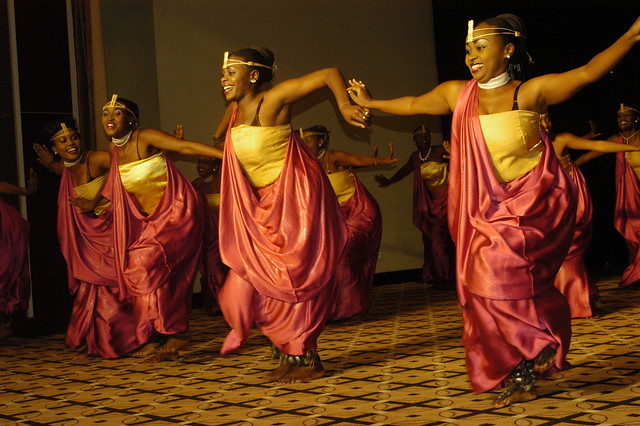
Rwanda: Few Negative Experiences

Thailand and Venezuela are in both lists. What is the secret to having many positive and few negative experiences? Is it cause by circumstances or is it innate in the people? 

While the above are interesting questions that need to be answered, the big pink elephant in the middle of the room is: why is nobody looking at this? And if someone is out there looking into it, why is nobody reporting on it? One can only conclude that our systems (media, political and economic) are biased towards maintaining economic growth as the purpose of our governance model.    


The Transition:
We will never be able to transition from the pursuit of economic growth to the pursuit of happiness until we change our political system. As long as our economic elite controls the political system, there is no room for change. Therefore, it is urgent to abolish elections, the parliament, the government, and the administration